

The retail landscape has undergone a monumental shift in recent years, evolving from static brick-and-mortar stores and basic e-commerce websites into a connected ecosystem. Modern consumers expect speed, personalization, and convenience across every touchpoint. Smart technology addresses these demands by blending digital capabilities with physical retail spaces to craft a seamless journey from initial product discovery to final delivery.
Retailers are no longer relying on simple promotional tactics or static window displays. Instead, they leverage artificial intelligence, the Internet of Things, augmented reality, and automated payment systems to predict consumer desires, optimize store operations, and eliminate friction. Understanding how these technologies work together reveals how the modern shopping experience is being transformed.
The Evolution of the Consumer Expectation
Shopping was once a simple, transactional process. Customers walked into a store, browsed available inventory on shelves, made a selection, and stood in line to pay a cashier. E-commerce introduced unprecedented convenience, allowing people to buy products from home with a few clicks. However, early online shopping lacked the tactile feedback, immediate gratification, and personal touch of physical retail.
Today, the line between digital and physical commerce has blurred into a hybrid concept often called phygital retail. Shoppers no longer view online and in-store shopping as separate entities. They research products on mobile apps while standing in store aisles, expect real-time inventory updates, and demand personalized recommendations based on past habits. Smart technology fulfills these heightened expectations by turning every step of the shopping trip into an interactive experience.
Personalization Driven by Artificial Intelligence and Machine Learning
One of the most impactful upgrades to the consumer journey is hyper-personalization. Traditional retail applied a one-size-fits-all approach, showing the same advertisements and product displays to every customer. Artificial intelligence and machine learning algorithms have replaced this broad strategy with tailored suggestions.
When users browse an e-commerce site or open a retailer app, machine learning algorithms analyze past purchase records, search histories, items left in shopping carts, and current location data. This analysis generates instant recommendations that match individual preferences.
AI also enhances physical store visits through mobile applications and Bluetooth beacon technology. When a shopper carrying a retailer app walks past a specific department, localized sensors can push notifications offering discounts on items they previously viewed online. This real-time relevance turns casual window-shopping into high-converting sales opportunities.
Bridging the Digital and Physical Divide with Augmented Reality
A primary challenge of online shopping has historically been the inability to try products before buying them. Augmented reality removes this barrier by allowing consumers to visualize items in real-world contexts.
-
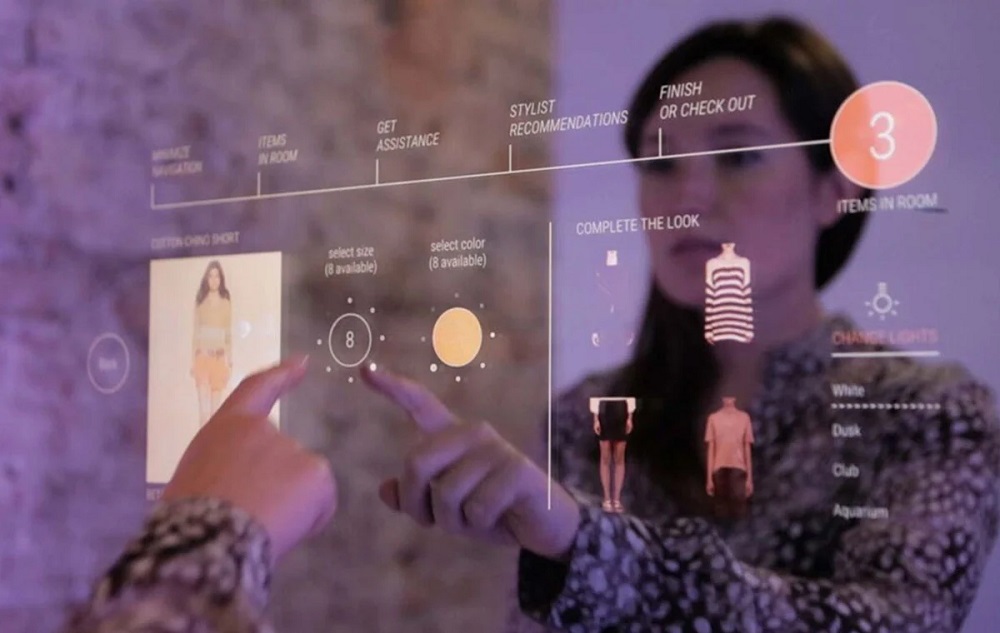
Virtual Fitting Rooms: Apparel brands utilize smart mirrors equipped with augmented reality cameras. Customers can see how clothing items fit, test different color variants, and view complementary accessories without changing outfits multiple times.
-
Home Furniture Placement: Home decor and furniture retailers offer AR apps that let users place true-to-scale 3D models of couches, tables, or light fixtures directly into their living rooms using a smartphone camera.
-
Beauty and Cosmetics Testing: Beauty platforms allow users to try on lipstick shades, foundations, and eye makeup virtually using front-facing cameras, reducing the risk of product returns.
By boosting buyer confidence, augmented reality reduces return rates and increases customer satisfaction.
The Internet of Things and Real-Time Inventory Accuracy
Behind every great consumer experience lies a well-organized supply chain. The Internet of Things connects physical objects to digital networks, providing full visibility across the store network.
Radio-frequency identification tags and smart shelf sensors track product inventory in real time. When a item is removed from a shelf or misplaced in another aisle, the system updates inventory levels instantly.
This visibility directly improves the shopping journey in several key ways:
-
It ensures accurate product availability listings on mobile apps for buy-online-pickup-in-store services.
-
It alerts store staff immediately when stock runs low, preventing empty shelves.
-
It helps employees locate specific sizes or items quickly when assisting in-store shoppers.
Frictionless Checkout and Automated Payments
Long lines at payment counters have long been a source of frustration for physical store shoppers. Smart retail technology addresses this bottleneck with frictionless point-of-sale systems.
Self-checkout kiosks have become standard across grocery stores and department chains, but newer implementations go even further. Automated stores use a network of computer vision cameras, weight sensors, and deep learning software to track items customers pick up. Shoppers simply scan a mobile app upon entry, take the items they want, and walk out of the store. Their accounts are charged automatically, eliminating checkout queues entirely.
Mobile point-of-sale terminals also empower store associates to process payments anywhere on the sales floor. This capability allows customers to complete transactions directly with staff members without waiting in a main line.
Data-Driven Customer Support and Intelligent Chatbots
Customer support has expanded beyond business hours through generative artificial intelligence and intelligent virtual assistants. Modern retail chatbots can answer complex questions, track order packages, assist with returns, and suggest gift ideas around the clock.
Unlike basic automated messaging systems of the past, contemporary AI support tools utilize natural language processing to understand context, tone, and user intent. When an issue requires human assistance, these systems hand off the conversation history to a live agent, ensuring the shopper never has to repeat themselves.
Frequently Asked Questions
What is smart technology in retail?
Smart technology in retail refers to the integration of digital tools like artificial intelligence, internet of things sensors, augmented reality, and cloud computing into shopping platforms to improve customer service and operational efficiency.
How does augmented reality help online shoppers?
Augmented reality allows online shoppers to overlay digital 3D models of products onto physical spaces using their smartphone cameras. This helps customers see how items like furniture, clothing, or cosmetics look before placing an order.
Are fully automated stores safe for payment processing?
Yes, automated stores rely on secure mobile wallet integration, encrypted payment gateways, and advanced sensor fusion systems to accurately track items and charge user accounts safely.
How do radio frequency identification tags work in retail stores?
Radio frequency identification tags transmit product data via radio waves to store sensors. This system tracks exact stock counts and physical locations without requiring manual barcode scans.
Does smart technology reduce the need for store employees?
Rather than eliminating jobs, smart technology changes employee responsibilities. Staff members spend less time on manual inventory checks or scanning barcodes and more time providing personal customer service and maintaining store operations.
How do location beacons improve in-store shopping?
Location beacons send low-energy signals to nearby smartphones carrying the retailer app. They deliver real-time map navigation, localized promotions, and relevant product details directly to the shopper based on their current aisle position.
Will traditional shopping disappear completely?
Traditional shopping is not disappearing; it is changing. Retailers are adopting hybrid retail models that combine physical tactile shopping with digital conveniences to create a unified experience.

Comments are closed.