

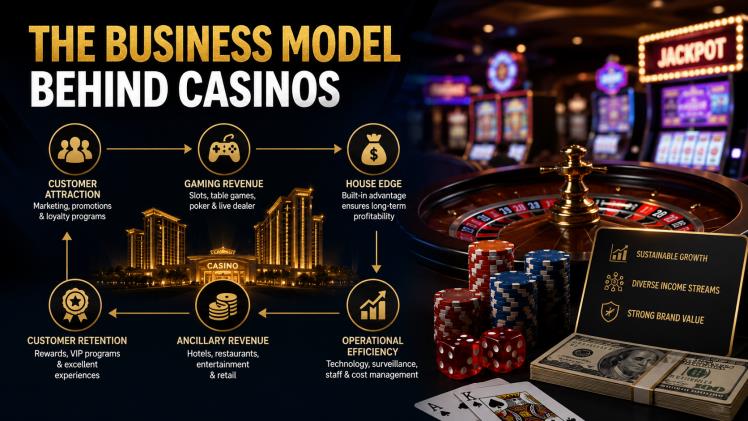
The global casino and gaming industry is undergoing a structural transformation. Once dependent almost entirely on traditional brick-and-mortar floor drops and high-roller VIP rooms, modern gaming operators have evolved into complex, multi-revenue commercial entities. Today, gaming companies leverage a sophisticated matrix of business models designed to maximize customer lifetime value, smooth out economic volatility, and capture market share across physical and digital spaces.
Driven by changing consumer demographics, sweeping regulatory updates, and rapid digital migration, the industry has decoupled itself from the simple mechanics of chance. By combining world-class hospitality, real-time predictive analytics, localized digital entertainment, and diversified monetization strategies, gaming brands have built highly resilient platforms capable of driving sustained long-term expansion globally.
The Integrated Resort Model: Diversifying Beyond the Gaming Floor
The most visible catalyst for physical market expansion is the Integrated Resort (IR) framework. Pioneered in major gaming capitals like Las Vegas and Macau, this model treats the traditional casino floor as just one component of a broader, multi-faceted entertainment ecosystem.
In a mature Integrated Resort model, non-gaming operations—including luxury lodging, Michelin-starred culinary venues, high-end retail malls, arena entertainment, and massive convention space—frequently generate over half of total property revenue.
This structural shift delivers distinct financial benefits:
-
Margin Insulation: High-margin hospitality, food and beverage, and event ticketing revenue protect property income against short-term statistical variance or volatility on table game floors.
-
MICE Market Monetization: Expanding Meetings, Incentives, Conferences, and Exhibitions (MICE) facilities drives high weekday hotel occupancy, monetizing property infrastructure during quiet non-weekend periods.
-
Expanded Customer Demographics: Offering diverse leisure amenities attracts non-gambling travel companions, family vacationers, and corporate convention attendees who would never visit a standalone gambling house.
By repositioning properties as comprehensive lifestyle destinations, operators expand their total addressable market while insulating corporate cash flow from fluctuations in consumer gaming budgets.
The Omni-Channel iGaming and Digital Ecosystem Model
The rapid liberalization of online sports wagering and legal iGaming markets across North America, Europe, and Latin America has created a massive digital growth vector. Modern operators no longer view physical casinos and online betting apps as competing channels; instead, they operate them as a unified, omni-channel ecosystem.
Digital casino applications allow brands to acquire customers at a lower cost, engage users in their daily environments, and continuously collect behavioral data.
Key operational pillars of the digital-physical hybrid model include:
-
Unified Loyalty Currency: Players earn shared loyalty points whether placing a blackjack bet on a smartphone or playing a physical slot machine, creating seamless cross-platform brand loyalty.
-
Targeted Cross-Funnel Marketing: iGaming platforms serve as efficient acquisition engines, offering digital users room upgrades, dining credits, or VIP event access to convert online players into high-spending physical resort guests.
-
Live Dealer Streaming Studios: Blending physical and digital formats, live dealer studios stream real-time table games directly to smartphones, offering the social authenticity of a physical table alongside the convenience of remote play.
This omni-channel infrastructure creates a continuous customer engagement loop, significantly increasing player retention and overall customer lifetime value.
Tech-First B2B Platform and Content Provider Models
Beneath the consumer-facing brands lies a thriving business-to-business (B2B) infrastructure model that fuels the broader casino economy. Developing compliant online casino software, maintaining secure cloud databases, operating live-streaming studios, and obtaining regulatory licenses across dozens of jurisdictions require massive engineering overhead.
Consequently, many gaming firms operate exclusively as B2B technology vendors, software aggregators, or white-label platform providers.
B2B revenue structures generally operate under three main frameworks:
-
Revenue Share Agreements: Content studios license proprietary slot titles or live dealer feeds to consumer-facing platforms in exchange for a fixed percentage of gross gaming revenue generated by those games.
-
Turnkey White-Label Solutions: B2B providers package full-stack technology systems—including payment processing, customer service, risk management, and regulatory compliance tools—allowing new consumer brands to launch platforms rapidly.
-
Data Feeds and Predictive Analytics: Specialized tech firms supply real-time sports data feeds, automated odds-making algorithms, and fraud-detection software to operators on long-term SaaS subscription models.
These B2B business models deliver predictable, highly recurring software margins without taking on direct credit risks or consumer marketing costs.
Data-Driven Yield Management and Behavioral Personalization
Modern gaming operators function as sophisticated data analytics enterprises. Every interaction with a digital loyalty card, mobile application, or physical slot machine generates valuable data points regarding player preferences, session lengths, average bet sizing, and loss tolerances.
Utilizing advanced artificial intelligence and machine learning models, operators execute real-time yield management across their entire operations:
-
Dynamic Comps Allocation: Algorithms analyze historical player value to issue personalized complimentary rewards—such as free play, fine dining credits, or suite upgrades—at precise moments to maximize retention without over-allocating marketing capital.
-
Automated Floor Configuration: Operators analyze physical and digital foot traffic metrics to dynamically adjust table minimums, reconfigure slot floor layouts, or surface high-performing game titles to peak user segments.
-
Algorithmic Churn Prevention: Machine learning models detect early behavioral indicators of player fatigue or churn, automatically triggering targeted promotional offers or responsible gaming interventions to preserve long-term platform health.
Replacing intuition with real-time algorithmic personalization allows operators to extract maximum yield per square foot of physical space and per user session online.
Social Gaming and Free-to-Play Freemium Engines
To capture market share in regions where real-money online gambling faces strict legal restrictions, operators have aggressively embraced social casinos and freemium mobile platforms. Social gaming models allow players to enjoy virtual slot machines, poker, and table games using non-cash virtual tokens.
Monetization within the social casino framework relies on proven mobile app mechanics:
-
In-App Purchases: Players buy virtual currency packages, cosmetic avatar upgrades, or premium feature unlocks to extend session times once daily free chip allocations are exhausted.
-
Ad-Supported Placements: Rewarded video advertisements allow casual, non-paying players to watch promotional content in exchange for additional virtual gaming credits.
-
Sweepstakes Models: Innovative sweepstakes platforms allow users to purchase social coins while receiving promotional sweepstakes entries that can be legally redeemed for cash prizes in specific jurisdictions.
Beyond generating direct digital revenue, social gaming platforms serve as low-cost, legal brand awareness channels that build early brand familiarity before new regional real-money markets open.
Frequently Asked Questions
What is the primary difference between a traditional casino model and an Integrated Resort?
A traditional casino model relies almost entirely on gaming floor revenues from slot machines and table games. An Integrated Resort model integrates extensive non-gaming amenities—such as luxury hotel rooms, convention centers, retail malls, fine dining, and entertainment arenas—generating significant revenue streams outside of gambling activities.
How do online casino apps generate revenue compared to physical casinos?
Both online and physical casinos generate primary revenue from the mathematical house edge built into games. However, online casino apps operate with significantly lower physical overhead, enabling them to offer personalized digital bonuses, run automated loyalty programs, and scale user capacity infinitely without physical floor space constraints.
What role do loyalty programs play in casino corporate strategies?
Loyalty programs act as the primary engine for customer data collection and retention. They track individual spending habits across gaming and non-gaming amenities, enabling operators to issue personalized rewards, optimize promotional budgets, and encourage repeat visits across both physical and digital properties.
How do B2B game developers make money in the casino industry?
B2B game developers create slot titles and table software, licensing them to casino operators. They typically earn revenue through revenue-sharing agreements (taking a small percentage of the net revenue generated by their games), fixed software licensing fees, or custom game development contracts.
What is a sweepstakes casino model, and why is it popular?
A sweepstakes casino model allows players to participate in social casino games using virtual currencies without direct real-money wagering. Players can acquire promotional sweepstakes tokens that can be redeemed for real cash or gift cards, allowing operators to offer legal, regulated digital gaming in jurisdictions where traditional iGaming is restricted.
How do non-gaming amenities help casinos weather economic downturns?
Non-gaming amenities—such as restaurants, concerts, retail shops, and corporate conventions—attract diverse audience demographics who visit properties for entertainment rather than gambling. This income diversification stabilizes overall revenue during broader economic shifts when consumer discretionary gambling budgets contract.
Why are gaming companies investing heavily in omni-channel integration?
Omni-channel integration links physical properties with digital apps under a single user account. This strategy drastically lowers customer acquisition costs, increases brand touchpoints, improves user retention, and boosts total lifetime spend by keeping players engaged both at home and on property.

Comments are closed.